



fun main() {
    val name = "stranger"        // Declare your first variable
    println("Hi, $name!")        // ...and use it!
    print("Current count:")
    for (i in 0..10) {           // Loop over a range from 0 to 10
        print(" $i")
    }
}
Latest news
October 15, 2026
Google Summer of Code 2026 With the Kotlin Foundation: Recap
Google Summer of Code 2026 has wrapped up! This was the Kotlin Foundation’s fourth year participating in GSoC, bringing new contributors into the Kotlin open-source ecosystem through hands-on projects and mentorship. This year, two projects successfully reached completion, tackling two areas of the ecosystem: improving recursion support in the Kotlin/Wasm backend and building a global […]

October 15, 2026
What Makes a Great KotlinConf Proposal?
The KotlinConf 2027 Call for Papers is now open! We invite developers from across the Kotlin community to bring their ideas, experiences, and expertise to the stage in Kraków. Do you have a Kotlin lesson or discovery that could help other developers? Perhaps you solved a difficult technical problem, introduced Kotlin into an existing codebase, […]
October 14, 2026
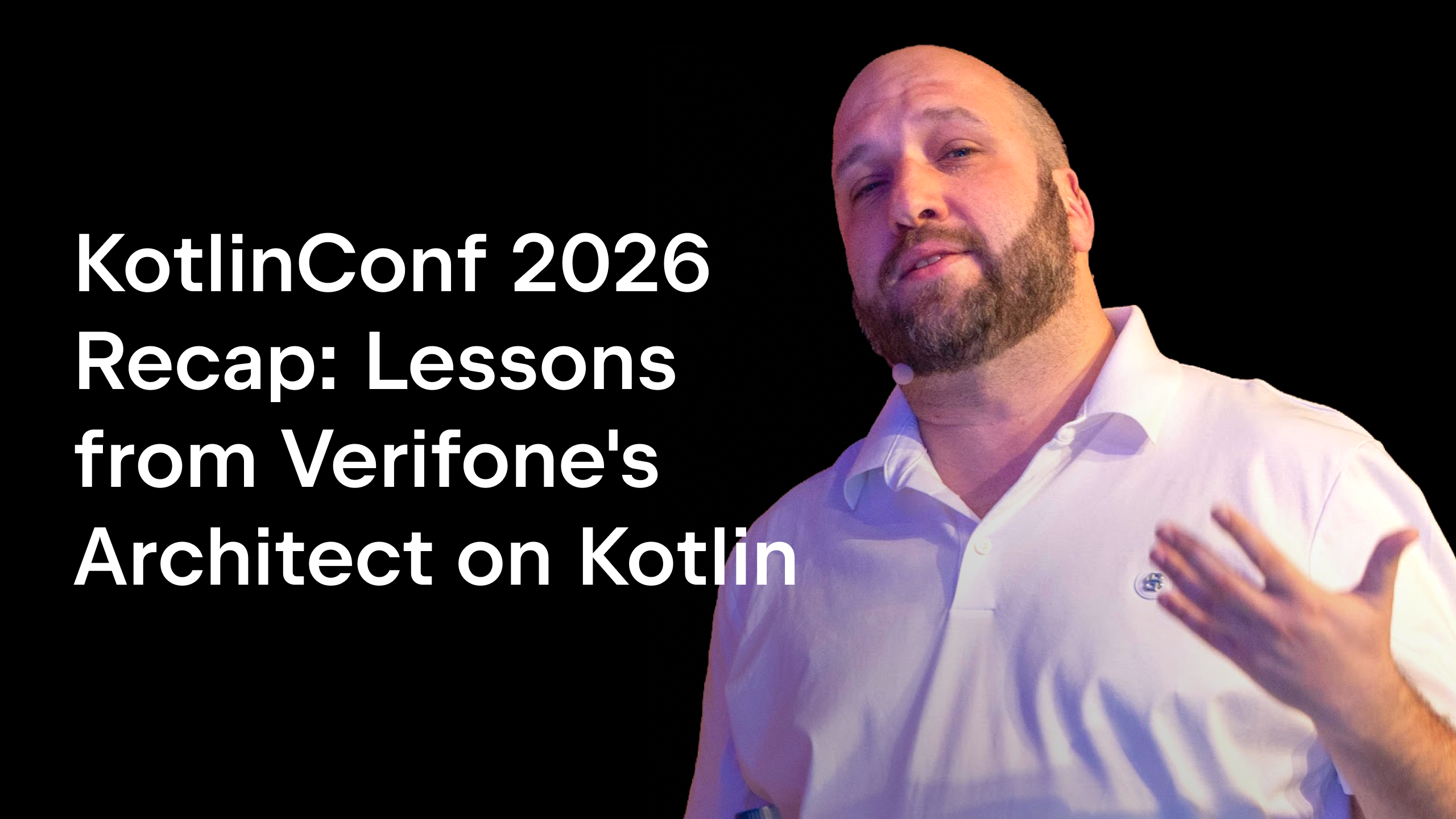
KotlinConf Recap: Lessons from Verifone’s Architect on Kotlin in Mission-Critical Payments
This article was written by an external contributor. Yuri Geronimus’s four-year-old son once asked him what his job was. Yuri told him he writes books: books that describe what he wants to change in the physical world. His son didn’t fully get it. Neither would most engineers: if you understand the words in your application […]
October 7, 2026
Start Your Next KMP App With Kotlin Toolchain 0.13
The Kotlin Toolchain is a unified entry point into Kotlin. It lets you build JVM, Android, iOS, multiplatform, and server-side applications with a simple declarative configuration. With the release of v0.13, we now recommend the Kotlin Toolchain for most new Kotlin Multiplatform (KMP) projects. Earlier this year, we promoted the Kotlin Toolchain to Alpha. Since […]
Kotlin in action







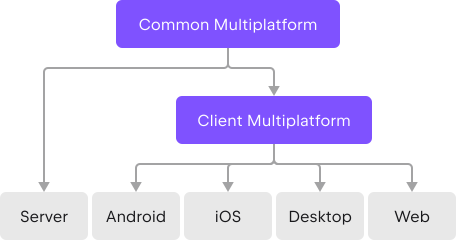
Share code on your terms and for different platforms
Big, friendly and helpful community


Kotlin Foundation